LLM Statistics 2026: Where 800 Million Users Are Searching Instead of Google

For two decades, "getting found online" meant one thing: ranking on Google. That's changing fast.

The State of LLM Usage in 2026

ChatGPT now has 800 million weekly active users. Perplexity processes 780 million queries a month. Google's own AI Overviews appear on more than a quarter of all searches. Meanwhile, 69% of Google searches end without a single click to any website.

The shift isn't coming — it's here. And the brands paying attention are already adapting.

This article breaks down the latest LLM usage statistics, how search behaviour is evolving, and what it means for businesses that want to stay visible in 2026.

ChatGPT, Gemini, Claude: Who's Winning

ChatGPT, Gemini, Claude: Who's Winning

ChatGPT remains the dominant player by a wide margin. According to DemandSage, the platform reached 800 million weekly active users by late 2025 — double the 400 million it had in February of that year. Daily, it processes over 2 billion queries and has crossed $10 billion in annual recurring revenue.

The scale is staggering: 92% of Fortune 100 companies now use ChatGPT in some capacity.

Google Gemini has emerged as the clear second-place contender. SQ Magazine reports that Gemini hit 400 million monthly active users by May 2025 — a fourfold increase from October 2024. Its tight integration with Google Search, YouTube, and Workspace has driven rapid adoption, with Gemini now powering 27% of assisted-query interactions within Google Search itself.

Claude (Anthropic) has carved out a strong position in enterprise and professional use. According to SQ Magazine's Claude analysis, Claude holds 21% of global LLM usage and has grown its enterprise AI assistant market share from 18% in 2024 to 29% in 2025. It's particularly strong in regulated industries — healthcare adoption jumped 61%, and 41% of university-affiliated AI applications run on Claude.

Perplexity is the fastest-growing AI search platform. Index.dev reports it processed 780 million queries in May 2025, up from 230 million in mid-2024 — more than tripling in under a year. With an 85% user return rate and average sessions lasting 23 minutes, engagement runs deep.

DeepSeek, the Chinese-made model, made waves in early 2025. AllOutSEO data shows it hit 33.7 million monthly active users and saw a 2,800% spike in unique visitors during a single week in January 2025. While its momentum has since cooled, it demonstrated that competition can emerge from anywhere.

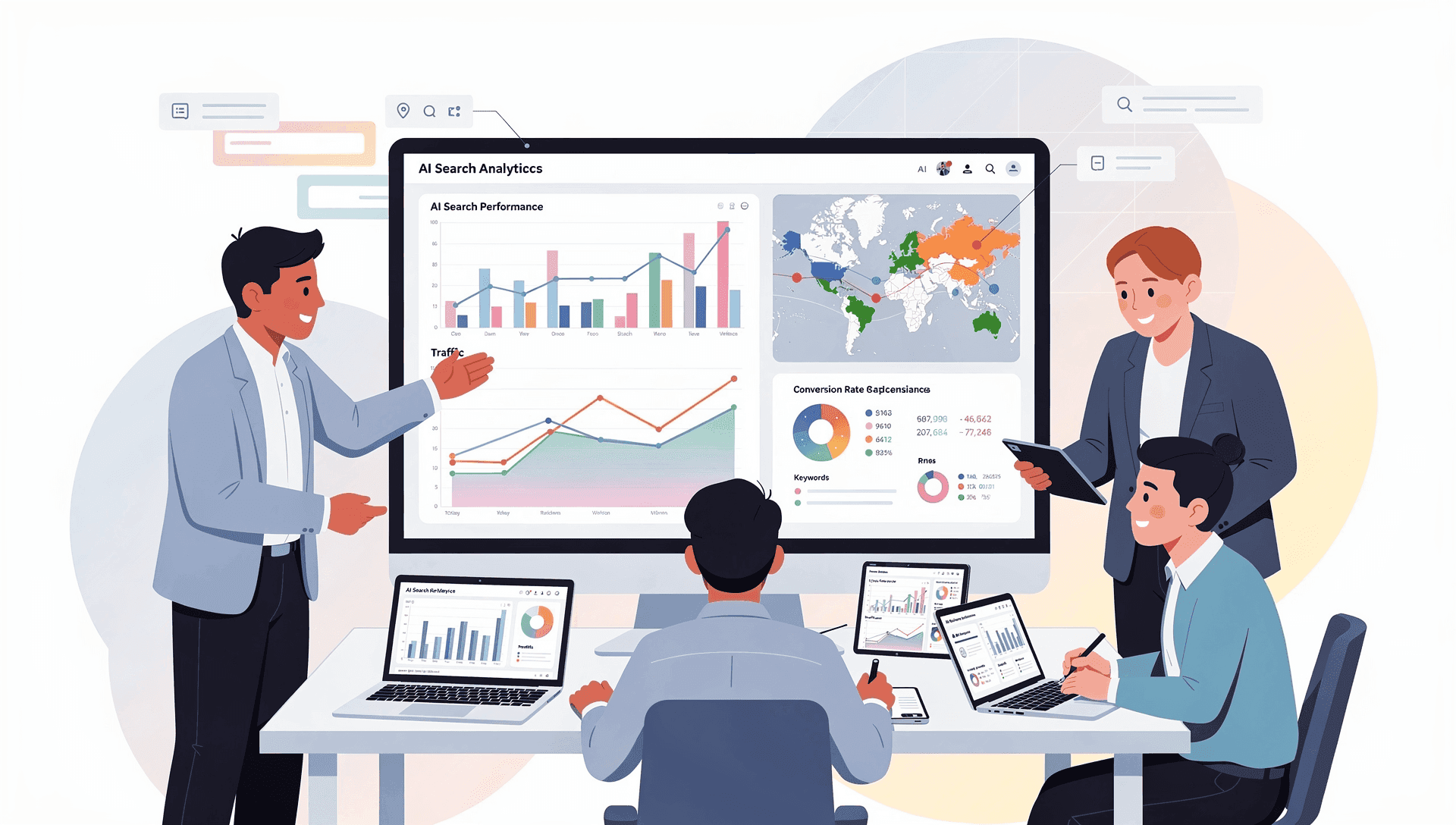
Market Share and Growth Breakdown

How Search Behaviour Is Changing

The rise of LLMs isn't just adding a new channel — it's fundamentally changing how people find information. And traditional search is feeling the impact.

The Rise of Zero-Click and AI Overviews

In July 2025, Similarweb reported that 69% of Google searches now end without a click to any website — up from 56% just one year earlier. That's a 13-percentage-point jump in 12 months.

The culprit? Google's AI Overviews.

Semrush's analysis of 10 million keywords found that AI Overviews appeared on 6.49% of queries in January 2025, peaked at nearly 25% in July, and settled around 15.69% by November. Some analyses put the current figure closer to 27%.

When AI Overviews appear, the impact on click-through rates is severe. Seer Interactive's study of 25.1 million impressions found:

Organic CTR

  • Dropped 61%

  • From 1.76% to 0.61%

Paid CTR

  • Crashed 68%

  • From 19.7% to 6.34%

For publishers, the traffic losses are real. Organic traffic to websites dropped from 2.3 billion visits per month in mid-2024 to under 1.7 billion by May 2025 — more than 600 million lost visits in 12 months.

Where Users Are Going for Answers

Users aren't searching less. They're searching differently.

ChatGPT crossed 1 billion weekly searches in 2025. Perplexity handles 780 million monthly queries. According to TTMS research, 34% of users now use an LLM daily or near-daily, and over half of consumers have tried LLM-based search.

Gartner predicted that traditional search engine volume would drop 25% by 2026 due to AI chatbots and virtual agents. While that exact figure is debated, the direction is clear: users are fragmenting across multiple AI platforms rather than defaulting to Google for everything.

The platforms serve different needs:

ChatGPT

General queries, content creation, coding assistance

Perplexity

Perplexity

Research-focused, citation-heavy answers

Gemini

Integrated with Google ecosystem, strong on mobile

Claude

Long-form document analysis, enterprise workflows

GPTrends research found only 25% overlap between ChatGPT and Perplexity recommendations — meaning platform-specific visibility can capture entirely different audiences.

The New Visibility Playbook

If fewer people are clicking through from search results, how do brands stay visible? The rules are changing.

Why Being Cited Beats Ranking

Here's the upside in the zero-click era: brands that get cited in AI responses capture disproportionate value.

Seer Interactive's data shows that brands cited in AI Overviews earn 35% more organic clicks and 91% more paid clicks compared to those not cited. Being the source an AI quotes is now more valuable than ranking in position one.

There's also a conversion advantage. According to Onely's analysis, AI search visitors convert 23x better than traditional organic traffic, and AI-referred traffic is valued at 4.4x higher economic value.

Why? Users arriving via AI recommendations have already been filtered for intent. The AI did the comparison work — they're arriving ready to act.

GEO: Generative Engine Optimisation Explained

A new discipline is emerging: GEO (Generative Engine Optimisation) — optimising content so that LLMs cite, reference, and recommend your brand.

Kevin Indig's State of AI Search Optimization 2026 outlines how this differs from traditional SEO:

Traditional SEO

  • Optimise for crawl and index

  • Keyword density matters

  • Backlinks build authority

  • PageRank determines visibility

  • Compete for position 1

GEO

  • Optimise for retrieval and citation

  • Conversational query coverage matters

  • Third-party validation builds authority

  • Selection rate determines visibility

  • Compete to be the cited source

The fundamentals overlap — quality content, clear structure, topical authority — but GEO demands a shift in focus. LLMs favour content that directly answers questions, uses clear structure, and is validated by external sources.

YouTube is consistently among the most-cited domains across LLMs. Third-party reviews, expert commentary, and authoritative external coverage now influence AI visibility more than owned content alone.

The Metrics That Matter Now

Traditional SEO metrics — rankings, impressions, click-through rate — no longer tell the full story. What we suggest tracking to see the full picture:

AI Presence Rate

What percentage of target queries feature your brand in AI responses?

Share of AI Conversation

Your visibility in AI answers versus competitors

Citation Authority

How often are you cited as a primary source?

Response-to-Conversion Velocity

How quickly AI-influenced prospects convert

BrightEdge internal tracking shows that AI agents (GPTBot, ClaudeBot, PerplexityBot, Google-Extended) now account for roughly 33% of organic search activity. These bots aren't indexing for later — they're fetching information in real time to answer user queries.

If your content isn't accessible to these agents, you're invisible to a growing share of discovery.

What Forward-Thinking Brands Are Doing

The brands winning in 2026 aren't mourning the loss of clicks — they're adapting to the new reality.

Optimising for AI Discovery

Practical steps that work:

Structure content for extraction

AI Overviews pull concise, direct answers. Content formatted with clear headings, bullet points, and direct question-answer patterns gets cited more often. Semrush found that 88.1% of queries triggering AI Overviews are informational — structure your content accordingly.

Answer the question early

LLMs favour content that provides the answer upfront, then supports it with detail. Burying the answer in paragraph six doesn't work when an AI is scanning for the most citable response.

Maintain freshness

AI models weight recency. Regularly updated content with current statistics and insights performs better than static pages. This article exists because "LLM statistics 2024" is already outdated.

Earn third-party validation

LLMs weigh external sources heavily. Coverage in industry publications, expert mentions, and authoritative reviews increase citation likelihood. First-party claims alone aren't enough.

Don't block AI crawlers

Some publishers have blocked AI bots out of frustration. This is counterproductive for most businesses. Blocking GPTBot or ClaudeBot removes your brand from consideration when millions of users ask questions in your domain.

Building Brand Authority Across LLMs

The fragmented AI landscape means visibility on one platform doesn't guarantee visibility on another. GPTrends found that ChatGPT, Perplexity, and Gemini each attract distinct audiences:

  • Claude skews heavily toward developers (strong overlap with GitHub, Stack Overflow, Notion)

  • Perplexity attracts business-focused users (overlap with Google Docs, Calendar)

  • Gemini appeals to technical and mobile users

  • ChatGPT has the broadest mainstream audience

Smart brands are treating AI visibility as a portfolio, not a single-platform play. That means:

Monitor

Monitoring how each platform represents your brand

Create

Creating content suited to different platform strengths

Build

Building presence where your specific audience searches

The Bottom Line

The Bottom Line

The numbers are clear: 800 million users on ChatGPT, 69% zero-click searches on Google, AI Overviews on a quarter of all queries, and CTRs in freefall.

This isn't a threat to fear — it's a shift to navigate.

Brands that adapt their visibility strategy to include AI citation, GEO, and multi-platform presence will capture the users who've already moved. Those that cling to rankings alone will watch their traffic erode.

The search landscape is fragmenting. The question is whether you fragment with it — or get left behind.

Want help adapting your visibility strategy for the AI search era? Get in touch with Evolv Agency to discuss how we can help.